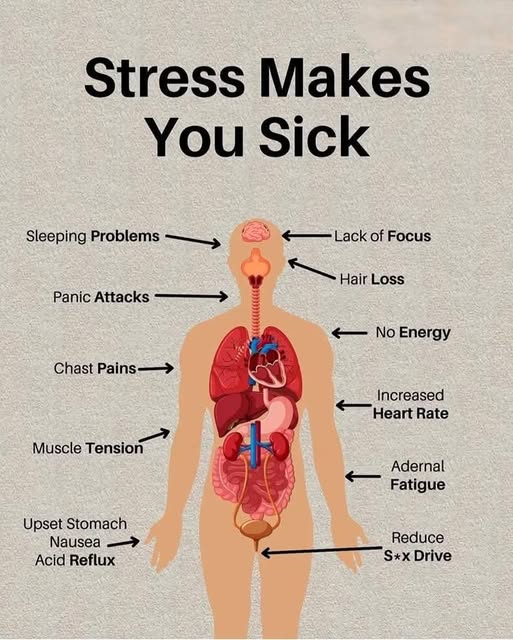
It can slow down digestion, leading to constipation or diarrhea.
5. Weakened Immune System
Prolonged stress reduces the body’s ability to fight infections, making you more prone to colds, flu, and inflammation.
6. Muscular Tension & Pain
Chronic stress leads to muscle tightness, tension headaches, back pain, and jaw clenching.
Long-term tension can contribute to migraines and joint pain.
7. Hormonal Imbalances
Stress impacts the adrenal glands, leading to adrenal fatigue.
It disrupts hormonal balance, causing hair loss, reduced libido, and menstrual irregularities in women.
Ways to Reduce Stress & Improve Well-being
1. Prioritize Sleep & Relaxation
Maintain a consistent sleep schedule and practice relaxation techniques like meditation.
Reduce screen time before bed to improve melatonin production.
2. Exercise Regularly
see continuation on next page
Physical activity helps release endorphins, which naturally reduce stress.
Activities like yoga, walking, or strength training are great options.
3. Healthy Diet & Hydration
Avoid processed foods, caffeine, and excessive sugar, which can increase stress levels.
Focus on whole foods, leafy greens, lean proteins, and omega-3 fatty acids for brain health.
4. Practice Deep Breathing & Mindfulness
Techniques like deep belly breathing, meditation, and mindfulness help control the stress response.
Taking breaks to practice gratitude can improve mental clarity.
5. Stay Socially Connected
see continuation on next page
Engage with family, friends, or support groups to talk about challenges and reduce emotional stress.
Social interactions boost mood and decrease feelings of isolation.
6. Manage Time & Set Boundaries
Avoid overloading your schedule and learn to say “no” to non-essential tasks.
Prioritize self-care activities such as reading, hobbies, or spending time in nature.
7. Reduce Caffeine & Alcohol Intake
Too much caffeine increases cortisol levels, making stress worse.
Instead, opt for herbal teas or water infused with lemon and cucumber for hydration and relaxation.